
Introduction to This Nervous System Regulation Blog
This blog offers a compassionate trauma-informed introduction to nervous system regulation – what it is, why it matters, and how trauma and chronic stress can impact it. We explore protective responses like fight, flight, freeze, and fawn, and share trauma-informed nervous system regulation frameworks such as Polyvagal Theory and the Window of Tolerance. You’ll also be introduced to my own Compassionate Nervous System Regulation Framework, Polyvagal Theory infographics, and further resources that can support the journey back to balance, safety, and connection.
What Is Nervous System Regulation?
Nervous system regulation often refers to the state and balance of the autonomic nervous system (ANS). This system controls automatic bodily functions like heart rate, breathing, digestion, and our stress responses. Of these, breath is unique, as we can also influence it consciously.
The ANS is a network of nerves that extend throughout the body, with neurons originating in both the brain and spinal cord. Two key brain regions involved in its function are the hypothalamus and the brainstem. The ANS has two main branches: the sympathetic nervous system (SNS), which activates the fight-or-flight response, and the parasympathetic nervous system (PNS), which supports rest, digestion and restoration.
There’s also a third division: the enteric nervous system (ENS). While it’s technically part of the ANS, it can also function independently and is often referred to as our “second brain.” It governs digestion and communicates with the rest of the ANS, especially via the vagus nerve – the main part of the PNS, making up about 75% of it’s nerve fibres. Like the rest of the nervous system, the ANS communicates through a complex network of electrical signals and chemical messengers.
The ANS is a functional division of the peripheral nervous system, which connects to the central nervous system (the brain and spinal cord). When we talk about nervous system regulation, it’s broader than the ANS alone – everything in the body is deeply interconnected.
It’s important to understand: it’s normal to move in and out of regulation throughout the day. No one lives in a perfectly regulated state all the time, and that’s not the goal. Life includes challenges, and our nervous system is designed to respond. Sometimes it may over-respond, but that’s still it doing its job based on previous experiences. With time and support, the system can learn when we are safe, helping the threat response settle more easily, when the environment is actually safe. The aim isn’t to avoid dysregulation, but to notice when it happens and gently support ourselves in returning to balance, again and again. This helps build nervous system efficiency, capacity, and resilience.
Understanding our nervous system, gently coming home to a regulated place, and befriending the body can support many things including healing & thriving.
My Working Definition of Nervous System Regulation
When I talk about nervous system regulation, I’m not referring to being calm all of the time or never getting dysregulated – this is normal and part of being human (though when we are dsyregulated too often/too much, and struggle to return to regulation, is when it’s problematic). Regulation isn’t a fixed state – it’s a dynamic process.
To me, helpful nervous system regulation means having the ability to move flexibly between different states, in response to life’s demands and stressors. It’s about matching the level of arousal to what’s needed in the moment – and being able to return to a more regulated state with some degree of ease when dysregulation happens. This supports a sense of safeness, connection, optimal functioning, growth, and healing.
Understanding Dysregulation: The 5 F’s
When we experience threat/stress in general, chronic stress or trauma our nervous system shifts into protective states that help us survive. These protective states are referred in different ways, one is the 5 F’s:
- Fight – activation of the SNS (mobilised)
- Flight – activation of the SNS (mobilised)
- Freeze –blends SNS activation (mobilised) with the PNS (immobilised), initially this is state is SNS driven – we are mobilised with physiological changes that are needed to flee or fight e.g. an increased heart rate and muscle tension. It’s a brief pause whilst the options to get to safety are assessed automatically and quickly, if there is no escape we begin to shift into a state of dysregulated immobility (flop). Freeze can be understood as part of a spectrum – with a more activated freeze at one end and flop (shutdown) at the other
- Flop – this is a shutdown state, it is the body’s last resort for protection when there is perceived to be no escape
- Fawn – this is also referred to as appeasing, the protection response is to please and pacify the threat for safety. It’s a complex blended state of fight/flight and freeze
At its core, nervous system regulation is about returning to a place of balanced physiology and a sense of safeness after being in one of the dysregulated states. It’s important for us all to be able to re-regulate quickly and efficiently, with some level of ease. This can be challenging for people who have experienced chronic stress or trauma, and/or are struggling with chronic health conditions such as ME/CFS, PoTS, fibromyalgia, or Long Covid – dysregulating more easily, taking longer to return to regulation and getting stuck in dysregualtion, over time this can be changed.
Why Regulation Matters
The good news is that your body knows how to come back to regulation – it knows the way home. Sometimes, it simply needs compassionate, trauma-informed support, this is part of my role in my work – to walk alongside people in the journey to remembering the innate state of regulation and connection.
Nervous system regulation is a foundational aspect of how we feel, think, move, and relate to others. For example, when we are in a fight or flight state (SNS) our experience may include anxiety, restlessness, difficult concentrating and a racing mind, we may be impatient, there may be insomnia, stillness may be difficult and movements are likely to be quick. When your nervous system is dysregulated, it can affect everything, including:
- Sleep and rest
- Pain and fatigue management
- Emotional resilience
- Concentration and memory
- Your ability to connect with others
Nervous system dysregulation is not a sign of weakness—these responses are wise protective responses, however, when they persist beyond the original threat, they affect our health and wellbeing and limit our ability to thrive – we can move from surviving to thriving.
What Regulation Isn’t
Nervous system regulation isn’t about pushing through, ignoring or fixing symptoms. It’s about learning to:
- Feel safer in your body
- Gently restoring balance
- Expanding capacity to be present and grounded even when life is challenging
Various things support nervous system regulation including understanding it, along with trauma-informed, compassionate, and somatic approaches – to support shifting out of survival mode and into a state where healing, connection, and thriving become possible.
We are social beings, nervous system regulation enables us to co-regulate—to be present, steady and attuned with others, both in our work and with the children and loved ones in our lives. It’s especially important with children as initially they can’t regulate themselves initially and then they learn to self-regulate from co-regulation.
The Nervous System Regulation Tools and Models I Use
The tools I use are grounded in compassionate trauma-informed care, compassion and mindfulness-based practices, somatic and embodiment practices, and clear frameworks that help to understand and support the nervous system with compassion and clarity in sustainable ways. The main frameworks I use are:
Window of Tolerance
This was developed by Dr. Dan Siegel, this model describes the optimal nervous system state (the Window of Tolerance) which is sometimes referred to as the optimal zone of arousal, where we are settled/safe, alert and engaged, and the two dysregulated states either side of it (hyperarousal and hypoarousal). Hyperarousal is the fight or flight response and hypoarousal is dorsal vagal in Polyvagal Theory – the parasympatehtic nervous system without the vagal brake and without the mobilisation of the SNS that we need to function day to day (this is not the same as the fight or flight responses of the SNS, which of course we also need!). The aim isn’t to be within our window all of the time, instead to know how to stay there as much as possible and keep gently expanding the window over time. The edges of the optimal zone are our stretch zone, here we can learn and grow.
There is a Window of Tolerance infographic I created below and a few links to more information on this model.

A helpful short video about the Window of Tolerance by Lewis Psychology https://m.youtube.com/watch?v=TNVlppGz0zM
A helpful Window of Tolerance blog by Dr Sarah Davies https://www.drsarahdavies.com/post/what-is-window-of-tolerance-emotional-regulation-model-explained
Polyvagal Theory
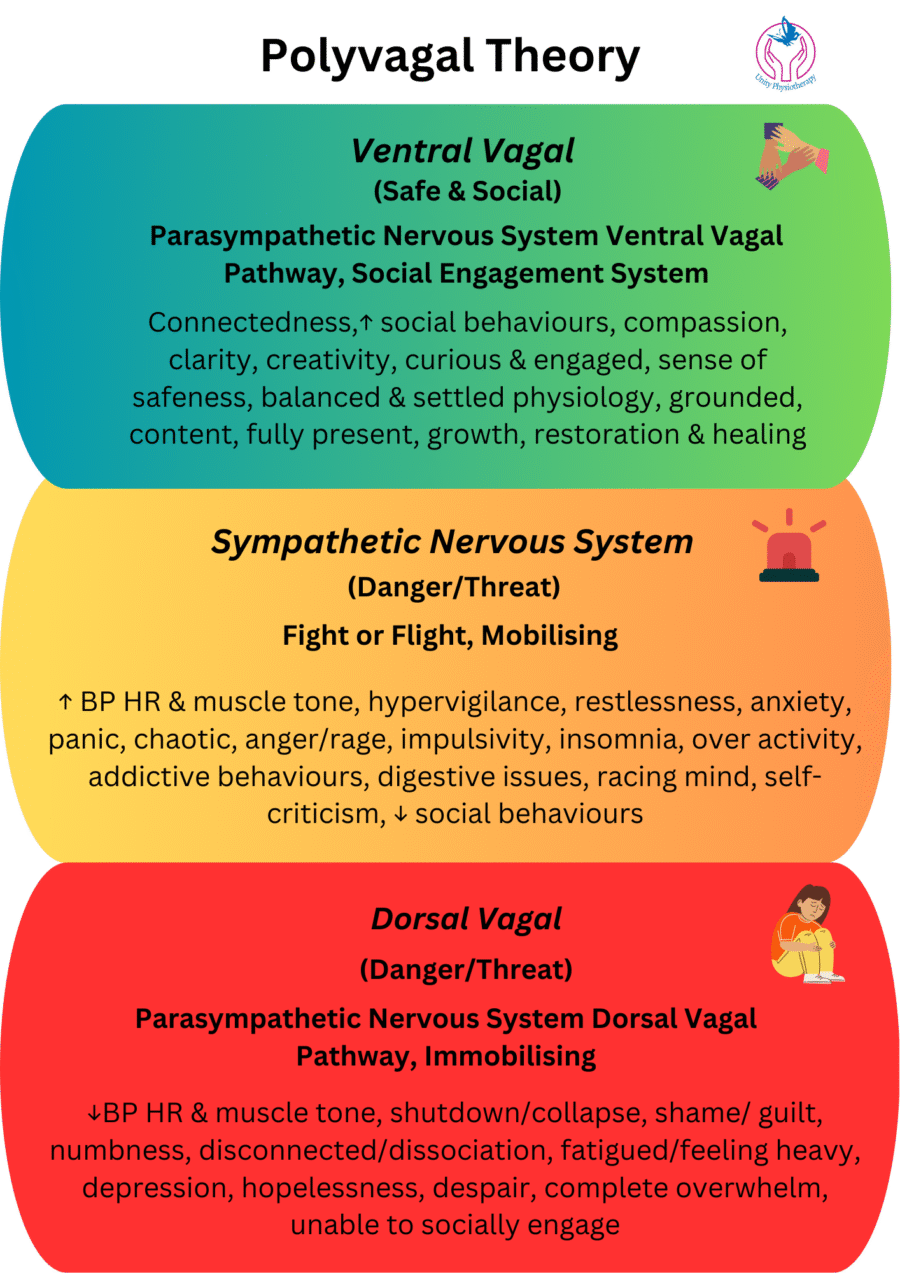
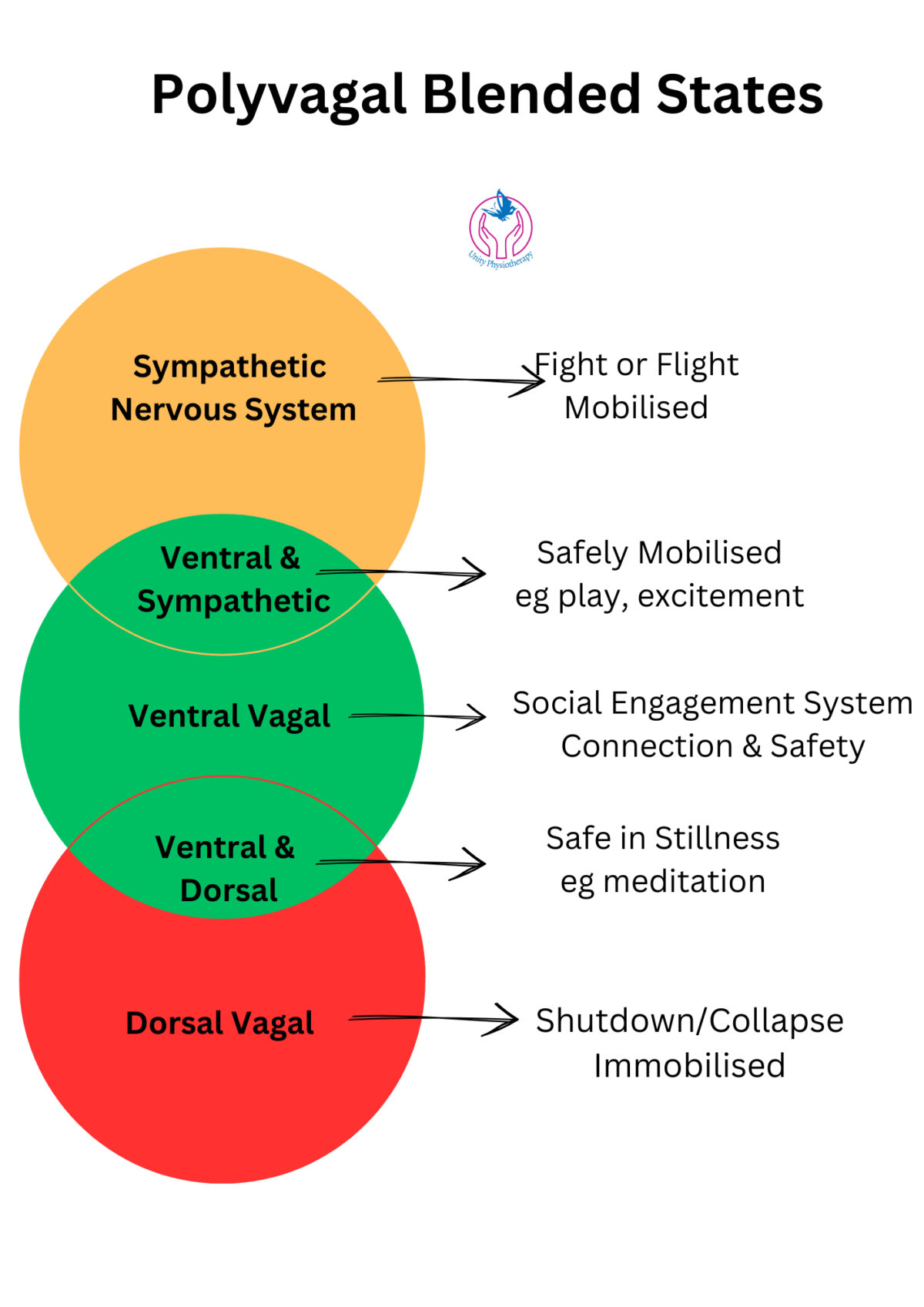
Developed by Dr. Stephen Porges, this theory explains how the autonomic nervous system moves between:
- 🟢 Ventral vagal (safety, connection & social engagement)
- 🔴 Sympathetic (fight/flight, mobilisation)
- 🔵 Dorsal vagal (shutdown, immobilisation)
Understanding and mapping these states helps us better understand our nervous system and gently support return to regulation. The three main states are shown in the first infographic below and the two blended ventral vagal ones are shown in the second infographic (please feel free to share these infographics, kindly ensure the credit is visible).
A helpful blog about what Polyvagal theory is by the Polyvagal Theory institute https://www.polyvagalinstitute.org/whatispolyvagaltheory
A useful video on Polyvagal Theory by Lewis Psychology https://m.youtube.com/watch?v=SlhFrBoEnxU
The Three Circles Model (The Three Emotional Systems Model)
This is part of Compassion Focused Therapy and was developed by Professor Paul Gilbert. The three emotional systems in this model are:
-
- 🔴 Threat (protection and safety seeking system, activating/inhibiting)
- 🔵 Drive (incentive/resourced focused system, pursuing and achieving, activating)
- 🟢 Soothing (connection, safeness & care, non-wanting/affiliative)
No one of these systems is good or bad, we need them all, the aim is for them to be in balance. Many people I work with have overactive threat systems and underactive soothing systems, which is a very common pattern partly due to the way our society is in general. One of the ways I use this model is to support people in growing the green (the soothing system) with practices and strategies that feel safe, nourishing and sustainable.
Trauma-Sensitive Mindfulness (TSM)
TSM was developed by David Treleaven, and I have completed his Advanced Trauma-Sensitive Practitioner training. It’s grounded in the 4R’s of trauma informed practice:
- Realising the widespread impact of trauma
- Recognising the signs and symptoms of trauma
- Responding with informed, supportive practices
- Resisting (or avoiding) Retraumatisation
You can read more about the 4 R’s on my Trauma Informed Practice page: https://unityphysio.co.uk/services/trauma-informed-practice/
Mindfulness can be a powerful tool for nervous system regulation—when it’s offered safely. I use mindfulness in a trauma-sensitive way: the practices are choice-based, gentle, and paced to meet each person’s needs. Regulation, choice, and empowerment are central to this approach.
My Framework: A Compassionate Path to Regulation
In both my workshops and 1:1 sessions, I use a visual framework that I developed to support regulation through compassionate awareness and curiosity. It’s non-linear – each element is interconnected, and many experiences may sit in more than one circle at a time.
The process usually begins with noticing your internal state through compassionate awareness with a gentle curiosity. From there, you might explore settling, grounding, letting go, or receiving what feels nurturing and supportive. Each part of the framework reinforces the others, helping you reconnect with safety, presence, compassion and self-trust at your own pace. Over time, this helps build your capacity for regulation, connection, and thriving.
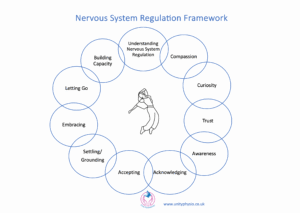
There’s no one right way to move through this—it’s a path of compassionate awareness and curiosity that you can return to again and again.
Summary
Nervous system regulation is a vital, ongoing process of gently returning balance for us all, and is especially important with chronic health conditions, or healing from chronic stress or trauma. It isn’t about fixing ourselves (we are all already whole)—it’s about gently understanding our bodies, restoring balance, and reconnecting with a felt sense of safety and compassion towards ourselves, others, and the world around us.
Understanding protective responses and using compassionate, trauma-informed frameworks, supports us in reconnecting with safety, regulating and building nervous system capacity, and moving from surviving towards thriving. This journey is unique for each of us, and it’s important that it’s grounded in curiosity, patience, compassion and kindness toward ourselves and others.
Would You Like to Explore More?
If you would like to explore nervous system regulation more take a look at:
Nervous System Regulation https://unityphysio.co.uk/services/nervous-system-regulation/
You can also book a free 15 minute discovery call to see if this work feels like a good fit for you 1:1, alternatively you are invited to take a look at my 4-week nervous system regulation workshop series on:
The Awakening The Body’s Wisdom: A Somatic Workshop Series https://unityphysio.co.uk/services/awakening-the-bodys-wisdom-somatic-workshops/